
The Container That Never Made the Vessel: Shipping Batteries in 2026
Shipping LiFePO4 batteries changed on 1 January 2026. Two rulebooks were revised the same day, and the paperwork that cleared by sea no longer clears by air.
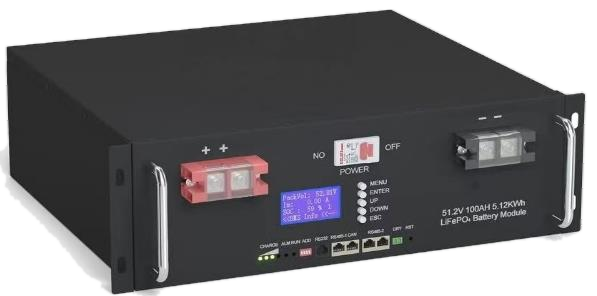
The container that never made the vessel
A buyer in Rotterdam had a 20-foot container of 48 V storage packs booked for a Tuesday cut-off. On Monday afternoon the forwarder asked for the UN number and the state of charge at dispatch. The factory answered "lithium battery, about 80 %". The booking was pulled, the container went back to the yard, and the shipment waited three weeks for a cargo-only slot.
That is not an unusual story. It happens because shipping LiFePO4 batteries is governed by a set of rules that most people in the chain assume somebody else is following, and in 2026 two of the rulebooks changed on the same day.
The rules for shipping LiFePO4 batteries are not complicated. They are just specific, and specifics are what get missed. This is not legal advice and it is not a substitute for your forwarder's DG desk. But if you buy or sell storage batteries, you should know where the traps are, because the cost of getting it wrong lands on the invoice, not on the ship.
Two rulebooks, both revised on 1 January 2026
Air freight runs on the IATA Dangerous Goods Regulations. The 67th edition took effect on 1 January 2026.
Sea freight runs on the IMDG Code. Amendment 42-24 became mandatory on the same date.
They are not the same document and they do not say the same thing. The single most common error in shipping LiFePO4 batteries is assuming that a pack cleared for sea will clear for air on the same paperwork. It will not. The two regimes also diverge on packaging, marks, stowage and who is allowed to sign, and a document set built for one and reused for the other is one of the more reliable ways to lose a booking.
| Air — IATA DGR 67 | Sea — IMDG 42-24 | |
|---|---|---|
| Packs shipped alone | UN 3480, cargo aircraft only, ≤30 % SoC | UN 3480, no SoC limit |
| Packs with equipment | UN 3481 / PI 966, 30 % limit above 2.7 Wh | UN 3481, no SoC limit |
| Installed in equipment | UN 3481 / PI 967, 30 % is a recommendation | UN 3481, no SoC limit |
| Containerised system | not viable | UN 3536, stowage class D |
| DG declaration | required | required |
| Where it is used | samples, urgent spares, small volumes | full containers, BESS, anything heavy |
Air: the state-of-charge rule for shipping LiFePO4 batteries just got wider
Lithium-ion batteries shipped on their own travel as UN 3480. That has been true for years, and so has the 30 % state of charge cap — they are forbidden on passenger aircraft and move cargo-only, at or below 30 % SoC.
What changed on 1 January 2026 is where the cap applies. Under the 67th edition, the 30 % limit now covers lithium-ion batteries packed with equipment — UN 3481, packing instruction PI 966 — for cells and batteries above 2.7 Wh. It used to be a recommendation in the lower-risk section; now it is a condition. Go above it and you need approval from the state of origin and the state of the operator, which is not a thing you obtain the afternoon before a cut-off.
For batteries contained in equipment (PI 967), the 30 % figure is still a recommendation rather than a hard requirement. If your product ships as a self-contained unit with the battery inside and no separate pack in the box, that distinction matters.
Two practical consequences follow. First, if your supplier charges packs to 50 or 60 % for out-of-box testing, an air shipment of those packs with equipment is now a compliance failure that has to be solved on the production line, not at the airport. Second, the watt-hour rating per battery — not per device, not per carton — decides which section of the packing instruction you fall into. Ask for it explicitly. It is the one number that decides which section applies, and the one most often missing from a quote for shipping LiFePO4 batteries.
Sea: no SoC rule, but a new packaging route for big packs
Sea freight has no 30 % state of charge requirement, which is why shipping LiFePO4 batteries by sea is the default for anything bigger than a sample carton. That is why almost every container of storage batteries goes by sea, and why the airfreight quotes you see for a full container are usually absurd.
What sea freight does have is a full dangerous goods regime: UN specification packaging, Class 9 lithium battery labels with the UN number, a dangerous goods declaration, and a stowage plan the carrier will actually accept.
Amendment 42-24 added something genuinely useful for the storage industry. Large batteries and large battery packs can now travel under LP903 large packagings with more than one unit inside, which gives containerised and heavy-pack shipments a compliant route that did not exist in the same form before. Batteries installed in a cargo transport unit — a containerised BESS, for instance — travel as UN 3536, and the amendment moved its stowage requirement to stowage class D. If you are shipping a containerised system rather than loose packs, UN 3536 is the entry you want your forwarder quoting against, not UN 3480.
One small date worth diarising: the lithium battery mark no longer carries a telephone number from 1 January 2027. Labels printed with the phone field are acceptable until 31 December 2026. If you have a stack of pre-printed labels, use them this quarter or write them off.
Lead-acid: the exemption worth more than the discount you negotiated
Here is where shipping LiFePO4 batteries and shipping lead-acid part company completely, and where a lot of money is left on the table.
Wet lead-acid batteries filled with acid are UN 2794, Class 8, corrosive. Fully regulated, dangerous goods declaration, the works.
Sealed VRLA blocks — AGM and gel — are UN 2800, "batteries, wet, non-spillable, electric storage", also Class 8 on paper. But if the battery passes the vibration and pressure differential tests in Special Provision 238, does not leak at 55 °C, has no free liquid, has its terminals protected against short circuit, and is marked NON-SPILLABLE, it is not subject to the dangerous goods regulations at all. It ships as general cargo.
That is not a small difference. It changes the freight rate, the cut-off, the paperwork, the number of carriers willing to take the booking, and whether your container waits for a DG slot.
The catch is documentation. The exemption is claimed on the strength of the manufacturer's test report, and a supplier who cannot produce the vibration and pressure differential evidence cannot claim it — the shipment reverts to full Class 8 handling. If you buy AGM or gel and your forwarder has been treating every container as DG, ask why. Some of those containers did not need to be. The same forwarder who over-declares your lead-acid is often the one under-documenting your lithium, and that is how a single account ends up with both problems.
The document set that actually gets checked
When shipping LiFePO4 batteries, five documents get asked for, and the order they are asked in tells you how experienced the forwarder is. A forwarder who asks for the UN 38.3 summary first has done this before; one who asks for the commercial invoice first has not.
- UN 38.3 test summary. Required for cells and batteries manufactured after 30 June 2003, and it must be made available to anyone in the supply chain who asks. A link or QR code satisfies this; a paper copy with every carton is not required.
- MSDS / SDS, with Section 14 carrying the UN number and packing instruction.
- Transport condition identification report — for shipments out of China this is the document the airline or carrier will actually read, and it states the UN number, the packing instruction and which aircraft the goods may fly on.
- Dangerous goods declaration, signed by someone trained and current. Not the sales manager.
- The marks and labels: the Class 9 lithium battery label, the UN number, and for UN 3480 the CARGO AIRCRAFT ONLY label.
For lead-acid under the non-spillable route, you swap most of that for the test report and the NON-SPILLABLE marking — which is exactly why the exemption is worth having, and exactly why shipping LiFePO4 batteries out of the same factory needs its own, separately filed document set.
What this costs, and where it hides
When shipping LiFePO4 batteries by sea, the DG surcharge is visible on the quote. What is less visible is everything around it: the DG-only cut-off that is two days earlier than the dry cut-off, the limited number of vessels that will accept Class 9, the yard storage if the booking slips, and the re-packing cost if the UN specification cartons were not used. Budget for shipping LiFePO4 batteries at the DG rate and treat any saving as a bonus, not the other way round.
For a buyer comparing two suppliers at the same FOB price, the delivered cost can differ by more than the product margin, purely on how the goods are classified and packed. A supplier who ships non-spillable lead-acid as general cargo and a supplier who declares the same product as UN 2794 are not offering the same landed price, even if the invoice says so. Two factories can quote an identical FOB number and land at different costs, purely because one of them has been shipping LiFePO4 batteries for a decade and the other has booked three containers.
What to write into the purchase order
For shipping LiFePO4 batteries, five lines in the PO, and every one of them is a shipment that got stuck once:
- The UN number and packing instruction the goods will be declared under, named explicitly.
- The state of charge at dispatch, in percent, if the shipment may go by air.
- The revision of the UN 38.3 test summary, and confirmation that it covers the exact pack, not just the cell inside it.
- Who prepares and signs the dangerous goods declaration — supplier or buyer — and who pays for re-packing if the packaging is rejected.
- For lead-acid: whether the non-spillable exemption is being claimed, and a copy of the test report that supports it.
What buyers ask before the first booking
Do I need a dangerous goods declaration for a full container of LiFePO4 packs?
Yes. UN 3480 is Class 9 whatever the quantity, and sea freight requires the declaration, the UN specification packaging and the Class 9 lithium battery label.
Can LiFePO4 batteries go by air at all?
Cargo aircraft only, at or below 30 % state of charge. From 1 January 2026 the 30 % limit also covers packs shipped with equipment above 2.7 Wh, so the charge level becomes a factory instruction, not a forwarder's question.
Are AGM batteries dangerous goods?
Only if they fail the non-spillable criteria. Most VRLA blocks pass Special Provision 238 and travel as general cargo — with the test report to prove it.
Who pays if the container is rejected at the port?
Whoever signed the declaration, which is exactly why the purchase order should name that party before the booking is made.
Is shipping LiFePO4 batteries cheaper in a containerised system than as loose packs?
Often yes. A containerised unit travels as UN 3536, which avoids re-packing individual packs to UN specification, and it removes a handling step at both ends. Ask your forwarder to quote both before you assume shipping LiFePO4 batteries in loose packs is cheaper.
The quote that matters is the one that clears
Shipping LiFePO4 batteries is the part of the trade where optimism is most expensive. A rate that is 15 % cheaper and a container that sits in the yard for three weeks is not a cheaper rate.
If you are shipping LiFePO4 batteries for the first time, or moving a product from sea to air, our stackable 48 V range ships with the UN 38.3 summary and the transport identification report in the same envelope as the commercial invoice, and the telecom base station packs are packed to UN specification cartons as standard. If your cargo is lead-acid instead, the AGM range is supplied with the non-spillable test evidence your forwarder will ask for.
None of it makes the freight cheaper. It makes the container leave.
Looking for a reliable battery supplier?
Send us your requirements — model, quantity and target market. Quote within 24 hours.
Get a Quote