
The Quote Said 100Ah. The Site Got 55 — Here Is Where the Rest Went
A 100Ah lithium battery is not 100Ah at your load. Four discounts — discharge rate, temperature, depth of discharge and the low-voltage cutoff — decide your runtime, and none of them is on the label.
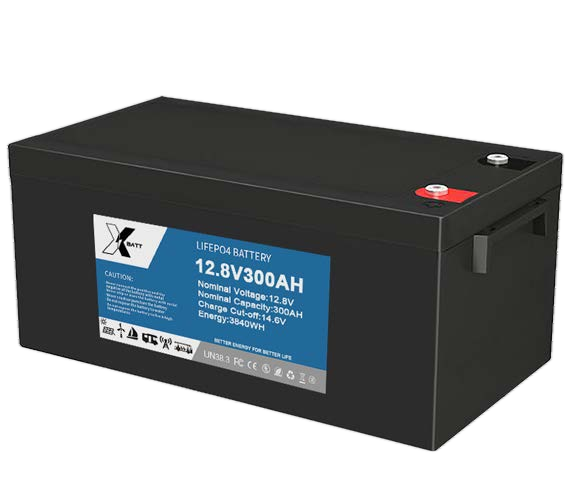
The quote said 100Ah. The site got 55.
A distributor in Southeast Asia sent us a sizing sheet last month. Eight 12 V 100 Ah AGM blocks, 48 V, feeding a 3 kW inverter for a small telecom site. On paper that is 9.6 kWh. He had sized it from the amp-hour number, multiplied by voltage, and added a 20 % margin for luck.
The site ran for about two hours before the inverter dropped out.
Nothing was faulty. The batteries were fine, the inverter was fine, the sizing arithmetic was not. A 100 Ah lead-acid block does not deliver 100 Ah at 3 kW, and it was never going to. A 100Ah lithium battery is not exempt from the same arithmetic either — it simply loses less of it. The label is a measurement taken under one specific set of conditions, and almost nobody quotes those conditions on the same page as the price.
This is the most expensive misunderstanding in the battery trade, and it costs more than any single purchasing mistake I know of. So let us do the arithmetic properly.
Amp-hours are not energy, and the label has a footnote
A 12 V 100 Ah battery holds 1.2 kWh of nominal energy. That part is simple. What comes out of it is a different number, and four separate discounts get applied before your load sees anything.
Discount one: the discharge rate. Lead-acid capacity is normally rated at the 20-hour rate, C20, which for a 100 Ah block means a 5 A draw. Pull 50 A instead and the chemistry cannot keep up: the acid inside the plate cannot diffuse fast enough, voltage sags early, and the block gives up before it has released its rated charge. This is Peukert's law, and for lead-acid the exponent sits between 1.15 and 1.30 depending on whether it is flooded, AGM or gel.
For a lithium-iron-phosphate cell the exponent is close to 1.03. That is the whole point of the chemistry in high-rate work: a 100Ah lithium battery delivers very close to 100 Ah at 0.5 C, and still above 95 % at 1 C.
Discount two: temperature. Capacity is rated at 25 °C. Below that, lead-acid loses roughly 0.6–1 % per degree; a block at −10 °C is effectively a 75–80 Ah block, and at −20 °C closer to 60 %. LiFePO4 loses about 0.8 % per degree for discharge, and stops accepting charge altogether at 0 °C.
Discount three: depth of discharge. You are not supposed to empty either chemistry completely, but the rules differ sharply. A cycling AGM bank is normally held to 50 % DoD to keep its cycle count. LiFePO4 is routinely run to 80–90 %. So half the label is off-limits for one chemistry and only a tenth for the other. A 100Ah lithium battery in the same rack gets to spend nine tenths of its label; the AGM gets half.
Discount four: system losses and the low-voltage cut-off. The inverter is 85–92 % efficient, so AC watts are not DC watts. And the inverter's low-voltage disconnect is set for the battery's protection, not for your runtime: on a 12 V system it typically cuts at 10.5 V, which on a loaded lead-acid block arrives while there is still 20–25 % of the charge inside. You paid for that charge. You will not get it.
The same 200Ah, two different sites
Take a 48 V bank, 200 Ah, 3 kW inverter, continuous load, 25 °C. Both chemistries, same label, same voltage.
| 48 V 200 Ah AGM | 48 V 200 Ah LiFePO4 | |
|---|---|---|
| Nameplate energy | 9.6 kWh | 9.6 kWh |
| Current at 3 kW AC (0.9 inverter) | ~69 A (0.35 C) | ~69 A (0.35 C) |
| Capacity at that rate | ~78–82 % of C20 | ~98–99 % |
| Usable before DoD limit | 50 % DoD | 90 % DoD |
| Cut-off losses | 10–15 % left when LVD trips | under 3 % |
| Realistic DC energy delivered | 3.2–3.7 kWh | 8.2–8.7 kWh |
| Nominal cost per usable kWh | baseline | 1.6–2.0× the price, 2.3× the energy |
Read the bottom row twice. On a nameplate basis lithium looks 60–100 % more expensive. On a usable-energy basis it is often cheaper per delivered kWh, before you count cycle life at all — and at 50 % DoD an AGM is doing 400–600 cycles against 4 000–6 000 for the lithium pack at 90 %.
That is not an argument that lead-acid is bad. It is an argument that lead-acid is being bought for the wrong jobs. For a UPS sitting at float 99 % of its life, the Peukert penalty never triggers, the DoD limit never matters, and a well-built AGM is the rational choice. For daily cycling through an inverter, the same block is being asked to do something it was not designed for.
Where the sizing sheet goes wrong
Three patterns show up over and over in the sheets we are asked to check.
Multiplying Ah by volts and calling it kWh. The arithmetic is correct and the answer is wrong, because it assumes the rating conditions. Fix: size on kWh at the actual C-rate, then apply temperature and DoD. It is also why a 100Ah lithium battery and a 100 Ah AGM block at the same invoice price are not the same purchase.
Sizing the battery and forgetting the inverter. A 3 kW inverter on a 48 V bank draws about 70 A. On a 200 Ah lead-acid bank that is already C/3, well past the comfortable zone. Either the bank grows or the inverter shrinks; you cannot have both at that size.
Assuming the low-voltage cut-off is a full stop. It is not. It fires early on a loaded lead-acid bank precisely because the voltage sags under load. An owner who watches the inverter shut down at "20 % remaining" concludes the battery is failing, when the correct conclusion is that the bank is undersized for that load.
How to compare two quotes without being fooled
Ask for four numbers, in writing, on the quotation itself. A supplier who can produce them is quoting engineering; one who cannot is quoting a label.
- Capacity at the actual discharge rate, not at C20. If your load is 70 A on a 200 Ah bank, ask what the capacity is at 0.35 C.
- Capacity at your minimum site temperature, not at 25 °C.
- The depth of discharge the cycle-life claim assumes, and the cycle count at that DoD.
- The low-voltage disconnect setting the supplier recommends for your inverter.
Then divide the price by the usable kWh from those four answers. Run that for a 100Ah lithium battery and for the AGM it is replacing, and the ranking usually flips. The ranking usually changes. It changed for the distributor above: his eight AGM blocks became twelve, and the site stopped dropping out at 2 a.m. — at a lower total cost than switching the whole bank to lithium, because he only needed backup, not daily cycling.
What this means for a 100Ah lithium battery buyer
The lithium side has its own traps, and they are usually about over-claiming rather than under-delivering.
A 100Ah lithium battery that claims 100 Ah at 1 C is fine. A 100Ah lithium battery quoting 100 Ah at 2 C is either a much larger pack or a creative datasheet. Ask for the discharge curve at your load, not just the headline capacity. Ask whether the BMS limits continuous discharge to 100 A or to 50 A, because a 100 Ah pack with a 50 A BMS is a 50 A pack no matter what the cells can do.
And check the temperature on the other end too: a pack rated 100 Ah at 25 °C will give you about 88 Ah at 0 °C, and nothing at all into the charger below freezing.
The questions buyers actually send us
Is a 100Ah lithium battery really 100 Ah?
At 0.5 C and 25 °C, yes, within a couple of percent. At 1 C expect 95–97 %. The number that decides your runtime is not the label, it is what the BMS will let you pull continuously.
Why does a 100Ah lithium battery cost more per Ah but less per kWh?
Because you can spend 80–90 % of it at a high rate instead of 50 % at a low one. Divide the price by usable kWh at your load and the comparison changes direction.
Can I drop a 100Ah lithium battery into a system built for a 100 Ah AGM?
Usually yes, and you will get noticeably more runtime. Check the charger first: LiFePO4 wants a different absorption voltage and no equalisation, and the old charger may not offer either.
Does the C-rate matter for a 100Ah lithium battery at 0.2 C?
Barely. The Peukert exponent is close to 1.03, so capacity at low rates is essentially the label. For lithium the derating that bites is temperature, not discharge rate.
The number that matters is the one at the load
Every battery is a chemistry wrapped in a set of conditions. The label describes the conditions the factory chose. The site imposes different ones. The gap between the two is where undersized systems, warranty arguments and disappointed buyers come from.
So before you approve a bank — or sign off on a 100Ah lithium battery purely on a nameplate comparison — do one thing: take the load in kW, divide by the inverter efficiency, apply the C-rate penalty, apply the temperature, apply the DoD, and see what is left. If the answer is smaller than the load needs, you have found the problem before the container ships rather than after.
If you are comparing a 100Ah lithium battery against an AGM block on the same duty, send us the load profile and the site temperature and we will run the numbers with you. The deep-cycle AGM range publishes its C10 and C20 ratings separately for exactly this reason, and the solar storage selection guide covers the chemistry decision that sits above this arithmetic.
Looking for a reliable battery supplier?
Send us your requirements — model, quantity and target market. Quote within 24 hours.
Get a Quote