
LiFePO4 Storage Battery in Cold Weather: What the 0 °C Charge Cutoff Really Costs You
A LiFePO4 storage battery stops accepting charge at 0 °C, and most datasheets bury that line. Here is what plating does, where the sensor really sits, and the seven clauses to put in a purchase order.
The morning the array works and nothing gets charged
It is −8 °C, the sky is clear at nine in the morning, and the array is already pushing 60 % of rated output. The controller is awake, the sun icon is on, and the charge current reads zero.
Three or four tickets like this land in our inbox every winter, always from the same kind of site: an unheated container, a pole-mounted cabinet, a barn, a telecom hut at 1,400 m. The owner assumes the battery is broken or the controller has failed. Neither is true. The LiFePO4 storage battery is doing exactly what it was built to do. What is failing is the design around it.
This is the least visible risk in lithium storage. Everyone compares cycle counts and price per kWh. Almost nobody checks the one line in the datasheet that decides whether the system works from November to March.
Why 0 °C is a chemistry wall, not a firmware setting
Charge a LiFePO4 storage battery below freezing and the ions cannot slip into the graphite anode fast enough to keep up with the current you are pushing. They do not queue politely. They plate out as metallic lithium on the anode surface.
That plating is not a temporary penalty. Much of it never comes back, and the deposits can grow into dendrites that eventually pierce the separator. Capacity quietly drops, self-discharge climbs, and in the worst case the cell shorts internally. Every serious cell maker writes a minimum charge temperature of 0 °C into the datasheet for this reason, and most of them void the warranty if you ignore it.
A BMS that opens the charge MOSFET at 0 °C is not being conservative. It is the last mechanical line of defence in front of an irreversible reaction.
Cold discharge and cold charge are two different problems
Buyers often treat "low temperature" as one number. It is not. Discharging cold is a performance issue: a LiFePO4 storage battery loses usable capacity as the electrolyte thickens and internal resistance rises, even though nothing is permanently damaged. Charging cold is a degradation issue, and it is the one that costs you the bank.
Typical figures for a well-built 48 V LiFePO4 storage battery look roughly like this. Treat them as planning numbers, not guarantees, because the curve shifts with cell format, C-rate and how well the pack is insulated:
| Cell temperature | Usable capacity vs 25 °C rating | Charge accepted |
|---|---|---|
| 25 °C | 100 % | Yes, full rate |
| 15 °C | 95–98 % | Yes |
| 10 °C | 88–92 % | Yes, reduced |
| 5 °C | 80–88 % | Yes, reduced |
| 0 °C | 72–80 % | Cutoff, or heavily limited |
| −10 °C | 55–65 % | Blocked on standard cells |
Two things follow. First, a 10 kWh LiFePO4 storage battery installed in a 5 °C outbuilding delivers closer to 8–8.8 kWh, so the winter sizing calculation needs a 15–20 % margin before you even think about snow on the panels. Second, the charge window in a cold climate is short — a few hours of sun — and if the pack is still below zero when that window opens, the day's generation is lost, not deferred.
Where the temperature sensor actually sits
This is the detail that separates a LiFePO4 storage battery that survives winter from one that quietly fades, and you cannot see it in a spec sheet.
Some BMS boards sample temperature with a thermistor on the PCB, inside the same sealed case but not touching a cell. The board draws current, warms up, and reports 2 °C while the 20 kg of cells around it is still at −3 °C. The BMS then enables charging into frozen cells. We have seen this in teardowns of low-cost packs, and it is the single most common hidden defect in cold-climate installations.
What you want on a cold-climate LiFePO4 storage battery is an NTC bonded to the cell surface or pressed between cells, ideally two or more so the BMS can act on the coldest one rather than an average. Ask the supplier where the sensors are physically mounted and for a photo of the pack with the lid off. A supplier who cannot answer that question in writing has not thought about winter.
What a blocked charge does to everything else
A BMS cutoff on a LiFePO4 storage battery is invisible to the rest of the system. The MPPT controller sees a battery that will not accept current and either sits at absorption voltage doing nothing or throws a fault. A generator-backed inverter-charger is worse: it pushes current, gets refused, faults out, and burns fuel for nothing. Nobody in that chain reports "the battery is cold". They all report a fault.
Cold also makes voltage sag look like a dead battery. Take a 48 V LiFePO4 storage battery at 50 A load:
- At 25 °C, internal resistance around 30 mΩ drops 1.5 V at the terminals.
- At 5 °C, at 60–80 mΩ, the same load drops 2.5–3.5 V.
- At 0 °C, at 100–150 mΩ, it can drop 5–6 V.
Set a low-voltage disconnect at 46 V and the system will trip on a healthy battery at 0 °C while it still holds most of its energy. The terminal voltage springs back the moment the load comes off, which is exactly how you tell a cold battery from a flat one.
Three ways to get a LiFePO4 storage battery through winter, and what each one costs
| Approach | What it does | Where it fits | What to verify |
|---|---|---|---|
| Insulated enclosure | Slows heat loss; the pack keeps its own discharge heat | Cheap, always worth doing first | 50–100 mm of rigid foam on all six faces, plus a sealed lid |
| Self-heating pack | BMS diverts charge current to heating pads until cells pass about 5 °C | Unattended sites, off-grid cabins, telecom | Heater trigger and release thresholds, heater wattage, whether heating runs on charge current only |
| Low-temperature electrolyte cells | Cell design accepts charge below 0 °C without a heater | Remote solar where heater energy competes with load | A pack-level test report at the claimed temperature, not a cell-level claim |
Self-heating models usually carry a 20–30 % premium. In an unattended installation that premium buys you a system you can walk away from; in a heated plant room it buys nothing and adds a failure point. The low-temperature electrolyte route is the most interesting development of the last two years for a LiFePO4 storage battery, but the claim has to be tested at pack level. A cell that charges at −20 °C in a laboratory fixture tells you very little about a sealed 100 kg pack with a BMS, busbars and a temperature gradient across sixteen cells.
What 2026 cell pricing does to this decision
Trade assessments through autumn 2026 put LFP energy-storage cells in the RMB 0.36–0.44/Wh range ex-works China, with 280 Ah and 314 Ah formats near the bottom and 100 Ah cells a little higher. That is up from the 2025 trough rather than down, driven by storage demand growing much faster than cell capacity came online. Figures differ by source and by assessment date, so read them as a range, not a quotation.
The practical consequence is uncomfortable. When the floor price is public and everyone knows it, a quote 20 % under the floor is not a bargain. It is usually Grade B cells, re-labelled stock, or a pack built from capacity-sorted rejects. In cold-climate projects this matters more than in mild ones, because cell-to-cell imbalance is amplified by temperature gradients: one weak cell hits the low-voltage cutoff first, the BMS stops the whole pack, and the usable capacity of a 16-cell LiFePO4 storage battery ends up set by its worst cell.
Ask for the factory matching record — capacity, internal resistance and voltage spread at QC — before you ask for a discount.
What to write into the purchase order
For a LiFePO4 storage battery going into a cold site, a short list — and every line has a real failure behind it:
- Minimum charge temperature, stated at pack level, with the tolerance of the measurement.
- Number and physical location of the NTC sensors, and which one the BMS acts on.
- Heater logic: on temperature, off temperature, wattage, and whether heating is powered from the charge source only.
- Rated capacity at 0 °C and at −10 °C, not only at 25 °C.
- IEC 62619 and UN38.3 reports for the finished pack, not for the cell alone.
- Cycle-life claim with the test temperature, depth of discharge and C-rate attached to it.
- A written statement of what voids the warranty, in plain language.
None of these cost the supplier money to answer. A supplier who can answer all seven in one email is a supplier who has shipped into a cold market before.
One winter, one bank, 18 % gone
An off-grid site in northern Europe ran four 48 V 100 Ah LiFePO4 storage battery packs in parallel for a monitoring load. The first winter took roughly 18 % of capacity, measured against the commissioning test. The heating pads had no thermostat and ran whenever the charger was live; the temperature sensors sat on the BMS board. Cells were charged at −4 °C on clear mornings for six weeks. Numbers rounded, customer anonymised, but the pattern is not unusual. Adding a thermostat, moving the sensors onto the cells and insulating the cabinet stopped the decline in the second winter.
Questions buyers actually ask
Can I charge a LiFePO4 storage battery at −5 °C if I drop the current to a trickle?
No, not on a standard cell. Plating happens at low current too, just more slowly. A few cell designs are qualified for reduced-current charging below 0 °C, and if yours is one of them the manufacturer will state the current limit and the temperature floor in writing. Without that document, the answer is no.
Does discharging in the cold do permanent damage?
Usually not. You lose usable capacity and you see more voltage sag, but the cells recover when they warm up. The damage comes from charging, and from the low-voltage trips that cold-induced sag causes.
Is a self-heating pack worth 20–30 % more?
If the site is unattended and the load cannot wait, yes. If the battery sits in a heated room and only the outside air is cold, no — spend the money on insulation and a proper charge profile instead.
What temperature should I size a LiFePO4 storage battery for?
The coldest sustained low over the three winter months at the actual installation height, not the regional average. Then apply a 15–20 % capacity derate for the coldest month and check that the array can still replace a day's consumption in four hours of weak sun.
The number worth asking for before you sign
Price per kWh is easy to compare and hard to get wrong. The charge cutoff on a LiFePO4 storage battery is easy to skip and expensive to get wrong, because the bill arrives eighteen months later as a bank that no longer holds what the label promised — and by then the container has cleared customs, the installer has moved on, and the argument is about whose fault the winter was.
So ask for one number before you approve the order: the lowest temperature at which the pack will accept charge, measured where the cells actually are, with a test report attached. You will get a straight answer from a supplier who has shipped into a cold market, and a paragraph of adjectives from one who has not.
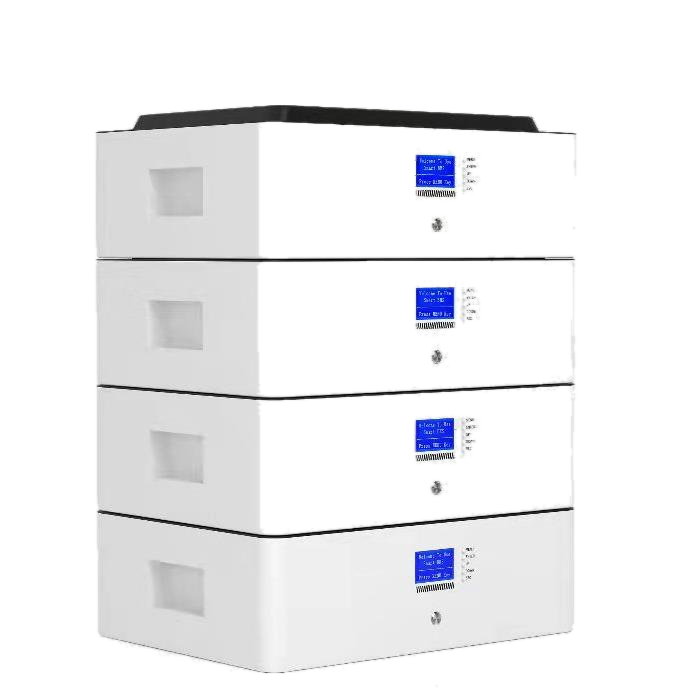
XBATT builds cold-climate packs with surface-mounted NTCs and thermostatic heating, which helps — but the seven questions above are worth asking of every supplier you shortlist, including us. If you are still weighing chemistry, the AGM, GEL or LiFePO4 comparison covers the sizing side, and the stackable 48 V range shows what a pack looks like when the cells, the busbars and the sensors are laid out for inspection rather than for a brochure photo.
Looking for a reliable battery supplier?
Send us your requirements — model, quantity and target market. Quote within 24 hours.
Get a Quote