
Your Lead-Acid Battery Is Not Class 8 — Until You Book It That Way
Most sealed VRLA blocks travel as general cargo under Special Provision 238, yet they are booked as Class 8 every day and pay for it. The three tests, the packaging photo that gets containers refused, and the paperwork that has to agree with itself.
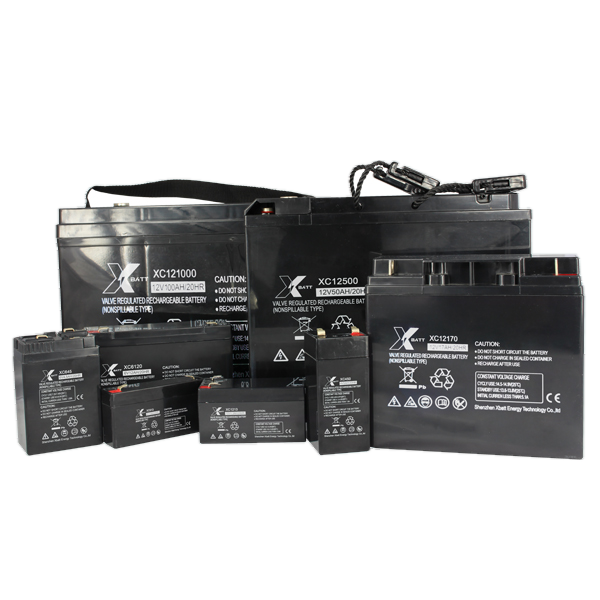
The container that waited for a slot it never needed
A buyer booked a 20-foot container of 12 V AGM blocks as Class 8 dangerous goods. The file went to the carrier's DG desk, the rate carried a dangerous goods surcharge, and the cut-off moved twice while the forwarder waited for a vessel that accepts corrosive cargo. The batteries were sealed VRLA. They had passed the non-spillable tests two years earlier. The same blocks would have sailed as general cargo, on the first available vessel, at the normal rate.
That story repeats because shipping lead acid batteries looks like one problem and is actually two. The electrochemistry is identical in both cases. The paperwork is not, and the paperwork is what decides the freight.
Two UN numbers, and only one of them costs you money
Lead-acid batteries enter the dangerous goods regulations under exactly two entries, and the choice between them is not cosmetic.
UN 2794 — batteries, wet, filled with acid. Class 8, corrosive. This is the entry for anything with liquid electrolyte free to move inside the case. It is a dangerous goods shipment, full stop.
UN 2800 — batteries, wet, non-spillable. Also assigned Class 8, which is where most buyers stop reading. But UN 2800 carries Special Provision 238, and Special Provision 238 can take the shipment out of the regulations entirely. Not "reduced requirements" — out. General cargo, standard booking, no dangerous goods declaration.
That third state is where the money is, and it is the one buyers most often fail to claim.
| UN 2794 | UN 2800, no exemption | UN 2800 + SP 238 | |
|---|---|---|---|
| What it covers | electrolyte free to move | sealed, but not proven | sealed and proven non-spillable |
| Hazard class | 8, corrosive | 8, corrosive | not restricted |
| Dangerous goods declaration | required | required | not required |
| Packaging | P801, plus SP 295 conditions | UN specification packaging | general export packaging |
| Short-circuit protection | required | required | required |
| Carrier booking | DG desk, longer lead time | DG desk | standard booking |
| Terminal acceptance | restricted windows | restricted windows | normal |
| DG surcharge | yes | yes | no |
What actually decides which entry applies
It is not the chemistry, and it is not the label on the datasheet. AGM and gel constructions are candidates for UN 2800 because the electrolyte is held in a glass mat or a thixotropic gel. They qualify only if they pass the tests. A flooded battery never qualifies, whatever the marketing says.
The distinction the regulations draw is physical, not chemical: can liquid escape the case under the conditions the battery will actually meet in transit? Everything in Special Provision 238 exists to answer that question with evidence rather than a promise.
The three tests behind SP 238
A battery is treated as non-spillable when it survives all three of the following without losing electrolyte.
Vibration. The battery is clamped to a vibrating platform and subjected to simple harmonic motion with an amplitude of 0.8 mm, a total excursion of 1.6 mm, sweeping from 10 to 55 Hz at 1 Hz per minute. The full sweep runs for 95 ± 5 minutes in each of three mutually perpendicular mounting positions, one of which has the filling and vent openings inverted. No leakage.
Pressure differential. Immediately after the vibration test, the battery is held at 24 ± 4 °C for at least six hours while a pressure differential of at least 88 kPa is applied. Again in three mutually perpendicular positions, again at least six hours each. No leakage.
Temperature. At 55 °C, electrolyte must not flow from a case that has been ruptured or cracked. This one is not a pass/fail test in the same sense — it is a property of the construction. A battery with free liquid inside cannot meet it.
Two further conditions sit outside the test sequence. The battery must contain no free or unabsorbed liquid, and the terminals must be protected against short circuit for transport. That second condition is where shipments get rejected, and it is not a laboratory matter at all.
The packaging photo that costs a booking
A test report proves the battery. It does not prove the carton.
Carriers assessing a UN 2800 non-spillable booking routinely ask for photographs of the packed configuration: terminal caps or insulating tape in place, inner dividers between units, nothing metallic bridging two terminals, the carton closed the way it will actually ship. A file with a perfect vibration report and a photo showing bare terminals is a file that gets refused, and the refusal usually arrives close enough to the cut-off that there is no time to re-pack.
The same logic applies to layer separation on a pallet. Units stacked directly on each other, terminals bearing load, or a pallet with no non-conductive separator between tiers will fail an inspection even though the batteries themselves are compliant.
Where the paperwork disagrees with itself
Three documents have to tell the same story, and they are usually written by three different people.
The MSDS must be consistent in section 14. If it declares UN 2794 and Class 8 while the shipment is being booked as non-spillable, the file stops there. For an exempt shipment the transport section should say the battery is non-spillable and not subject to the regulations under Special Provision 238, with the reasoning, not just a blank.
The test report must cover the model being shipped, not a sibling model from the same family. Vibration and pressure results do not transfer across case sizes or terminal configurations, and a report whose model number does not match the invoice is worse than no report at all — it invites the question of what else does not match.
The transport condition identification report is the document the booking desk actually reads. It should state "not restricted" explicitly and name the provision it relies on. If it says "limited quantity" or leaves the classification implied, expect a phone call.
Sea, road and air do not use the same provision
SP 238 is the sea and road route, through the IMDG Code and ADR. Air freight runs on the IATA Dangerous Goods Regulations, where the equivalent relief sits in Special Provision A67 of the 67th edition. The tests are substantively the same, but the document set is not, and a report written for sea is frequently refused for air because it does not cite the air provision.
If any part of an order might move by air — samples, urgent spares, a replacement string for a commissioning deadline — get the air report at the same time as the sea report. Ordering it later means the goods sit while a laboratory works.
Where the cost actually sits
The DG surcharge is the visible line, and it is rarely the largest one. Four others hide behind it:
- Booking lead time. DG desks accept a narrower set of vessels, so the gap between ready date and sailing stretches. For a project with a commissioning date, that gap is the real cost.
- Terminal windows. Some terminals accept Class 8 only in defined slots, which constrains trucking and can add a day at each end.
- Re-packing. If the packaging is rejected at the gate, someone pays to open, re-pack and re-present the container. That someone is whoever signed the declaration.
- Storage. Every day the container waits is a day of yard rent and a day of the buyer's money.
Claiming the exemption correctly removes all four. Claiming it wrongly — a report that does not match, a photo that shows bare terminals, an MSDS that contradicts the booking — converts a cheap shipment into an expensive argument.
What to write into the purchase order
Six lines, and each one closes a gap that has held a container before:
- The UN number the goods will be declared under, and whether the non-spillable exemption is being claimed.
- Confirmation that the vibration and pressure differential tests were performed on this model, with the report attached to the order, not promised later.
- The wording of MSDS section 14, quoted, so it can be checked against the booking before the container is stuffed.
- The packaging configuration in writing: terminal protection method, inter-unit separation, pallet layer separation.
- Whether an air-freight report under IATA A67 is included, if any part of the order might fly.
- Who signs the declaration, and who pays for re-packing if the terminal rejects the configuration.
What buyers ask before the first booking
Are AGM batteries automatically non-spillable?
No. AGM is a construction that can qualify. Qualification depends on passing the vibration, pressure differential and 55 °C conditions, and on the evidence existing for the exact model. Ask for the report before you ask for the rate.
Can I ship lead-acid batteries as general cargo without any documents?
You can ship them as general cargo, but not without documents. The exemption is claimed, not assumed: the carrier will want the test report, and the identification report has to say "not restricted".
What happens if the battery fails the tests?
It ships as UN 2800 Class 8, or as UN 2794 if there is free liquid. That means UN specification packaging, a dangerous goods declaration, a DG booking and the surcharge. It is a legitimate shipment — just a slower and more expensive one.
Do gel batteries need the same tests as AGM?
Yes. The relief attaches to the physical behaviour of the battery, not to the chemistry that produces it. Gel constructions usually pass comfortably, but they still need the report.
Is a UN 38.3 report useful here?
No. UN 38.3 is a lithium test. Lead-acid transport documents are the vibration and pressure differential reports, the MSDS and the identification report. A supplier offering UN 38.3 for a lead-acid block is telling you they have not read the file.
Does the exemption expire?
The report does not carry a printed expiry date, but carriers and auditors increasingly expect recent evidence, and a report issued for a discontinued case design proves nothing about the current one. Refresh it when the model changes.
The cheapest freight is the one that sails first
Shipping lead acid batteries is not complicated once the entry is chosen correctly. It is expensive when it is chosen by default, because the default is always the conservative one, and the conservative one is always Class 8.
If you are moving VRLA blocks and have never claimed the non-spillable route, start with the report rather than the quote. Our AGM range and deep-cycle line ship with the vibration and pressure differential evidence and an MSDS whose section 14 matches the booking, and the GEL series is tested to the same sequence. If the destination also asks what happens when a jar fails in service, the warranty and quality page covers the claim route.
Looking for a reliable battery supplier?
Send us your requirements — model, quantity and target market. Quote within 24 hours.
Get a Quote