
How to Optimize Charging Conditions to Extend Battery Service Life
Most premature battery failures come from charging, not from the battery. Voltage profile, temperature compensation, current limits and equalisation - a practical checklist.
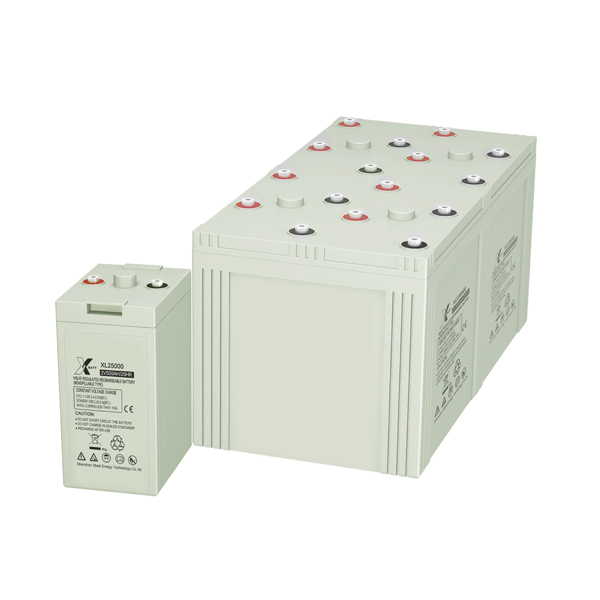
Charging is where service life is won or lost
When a lead-acid battery dies years before its datasheet promised, the cause is almost always the charging regime rather than the battery. Undercharging builds up sulphation; overcharging drives gassing, water loss and grid corrosion. Both are avoidable with a handful of settings.
1. Match the voltage profile to the chemistry
- AGM VRLA — cycle 14.4–14.7 V, float 13.5–13.8 V at 25 °C
- GEL VRLA — cycle 14.1–14.4 V, float 13.5–13.8 V; overvoltage causes irreversible dry-out
- Flooded / tubular OPzS — cycle up to 14.8 V, float 13.5–13.8 V, periodic equalisation permitted
Running an AGM profile on a GEL block is one of the most common — and most damaging — commissioning mistakes. Always check the profile against the specific datasheet.
2. Compensate for temperature
Apply roughly −3 mV per °C per cell, about −18 mV/°C for a 12 V block. Without compensation, a battery at 40 °C held at a 25 °C float voltage will gas, dry out and lose years of life; at 0 °C it will simply never reach full charge.
3. Limit current and return enough charge
- Initial charge current is typically limited to 0.15–0.25 C; never exceed the datasheet maximum.
- Return at least 1.15–1.2 × the ampere-hours removed, otherwise the battery drifts into chronic undercharge.
- Avoid repeated shallow recharges after deep discharges — that is how sulphation starts.
4. Equalise only where the chemistry allows
Flooded and tubular types benefit from a periodic controlled overcharge that re-mixes the electrolyte and reverses light sulphation. Never equalise a standard VRLA AGM or GEL battery unless the datasheet explicitly permits it: the gas cannot be recombined fast enough and the valve will vent.
5. Watch the environment
Every 10 °C above 25 °C roughly halves design life.
A 12-year design-life battery held continuously at 35 °C becomes a 6-year battery, no matter how good the charger is.
Ventilation, spacing between blocks, and keeping batteries away from direct sun or adjacent heat sources are cheap measures with a large effect.
_Send us your battery model, ambient temperature range and duty cycle — we will confirm the correct charging profile before you commission the system._
Looking for a reliable battery supplier?
Send us your requirements — model, quantity and target market. Quote within 24 hours.
Get a Quote