
Applications
Battery for Medical Carts, Monitors and Portable Equipment
Two very different batteries hide under one label. A monitor or infusion pump sits on float for years and is asked for twenty minutes once in a while. A crash cart or a mobile workstation cycles every shift and gets plugged in whenever somebody remembers. Same clinic, opposite duty. Pick the block by the duty, not by the amp-hour figure, because the amp-hour figure is the only thing the two have in common.
What decides life in this duty
A cart battery cycles. A monitor battery floats.
A mobile workstation that runs on battery between rooms is doing a shallow cycle every shift, which is the hardest thing you can ask of a small VRLA block. A bedside monitor spends 99 % of its life at float and dies of slow dry-out. One battery type rarely serves both well, so ask which duty the device actually runs before comparing prices.
Sealed matters because of where it sits
A valve-regulated block will not spill acid on a trolley pushed past a patient, and that is the reason the format exists in clinical space. It is still not a licence to charge it in a ward: charging produces gas even in VRLA, so the charge point belongs in a ventilated room, not beside the bed.
Batch consistency is a clinical requirement
When a hospital swaps batteries across a fleet of identical carts, mixing batches means mixing ages, and the fleet runtime becomes the runtime of the oldest block in it. Ship one batch per fleet where you can, and record the batch on the device sheet so the next replacement is not a guess.
What to put in the RFQ
- Device duty: float standby or cyclic cart
- Block dimensions and terminal orientation in the housing
- Charge voltage the device's own charger applies
- Ambient temperature where the device is stored
- Transport documents: UN 2800 and MSDS on file
Series built for this duty
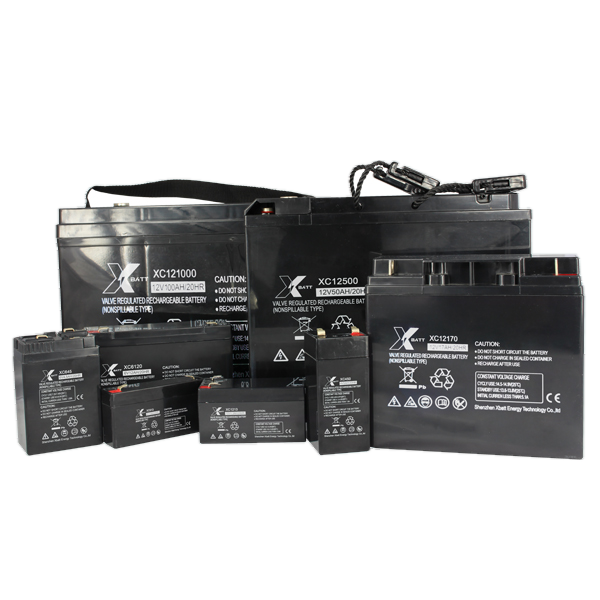
Pulled from the catalogue by application tag, not by marketing copy. Every series below is engineered for this load profile.
Buyer questions
Can I fit a standard AGM block in a medical device?
Only if the dimensions, terminal layout and charge voltage match what the device expects. The device is approved as a system, so a block with the same Ah but a different charge profile can void the approval even though it physically fits. Check the service manual's battery specification, not just the label on the old block.
Why do cart batteries swell after two years?
Continuous charging in a warm corridor, plus repeated shallow cycles with no full recharge, drives the positive plate to expand and the case to bulge. It is an overcharge-and-heat failure, not a manufacturing defect. Lower the float voltage at the actual temperature, or move the charge point out of the hot spot.
What paperwork ships with medical batteries?
For VRLA blocks, the UN 2800 transport classification, an MSDS, and a batch record with the manufacturing date. Hospitals increasingly ask for the date code on the case as well, because a battery that sat in a warehouse for eighteen months arrives with most of its life already spent.
Read before you quote
- 2.27 V Is Not a Setting. It Is a Temperature.
- AGM and GEL Battery Maintenance: A Working Checklist
- How to Tell If a Storage Lead-Acid Battery (Gel / AGM) Is Brand New or Refurbished
Main applications
Send us the load profile
Tell us the voltage, runtime or days of autonomy, ambient temperature and target design life. We reply with a sized recommendation and an FOB price, usually within one working day.
Request a quote →